





By Chief Cleaver Uzezi Daniels, LLM, BL,FCIA Public Policy Analyst/Legal
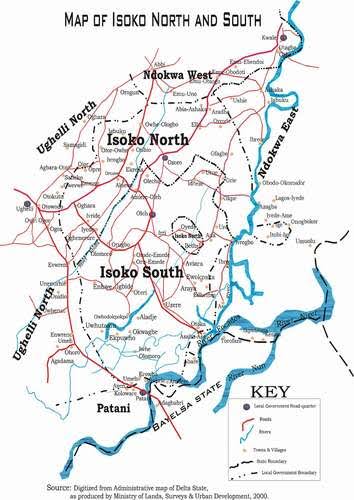
Psychologist The oil and gas exploration in nigeria started in the early 1950s and by 1956 oil was found in oloibiri, now in bayelsa state, and two years after in 1958, oil was also found in Uzere in isoko and drilling started in 1959.
In olomoro, another onshore oil well was found, and drilling activities started in 1962.All together, there are 4 oil flow stations in isoko land with several cogged oil Wells yet to be opened for production. Agip and Shell were the dominant explorers, and recently Npdc/Heritage, and Oando have taken over the activities of Agip and Shell as the new operators.
The isoko composite economic contribution to the niger delta area of Nigeria includes oil and gas, palm oil,rubber,cassava, plantain, yams, fish production, etc.Isoko is the second largest ethnic group in Delta state, after Urhobo.
With good arable lands,farming is the major economic occupation of the isokos, and its contribution to the food baskets is reputable. Garri production and corn flakes making are legendary.
However, the effects of oil exploration hazards have impacted nagatively on isoko lands over the years since 1957, when the onshore oil production activities started in isoko oil fields.
It is our pain that the entire isoko communities have been subjected to environmental degradation,and isoko farms yield emanciated, the economic prosperity is poor, ecosystems poisonous, and life expectancy reduced.
Public electricity is a mirage and craft centres, and small-scale industries are not sustainable to improve commercial activities to provide employment. The few industries running on diesel engine generators are groaning.
Despite the hue and cries of the population, the oil and gas explorers paid no attention to the development of the isoko communities.
They have the capacity under social corporate responsibility policy to provide gas turbines to give electricity to the communities, and it is woefully disappointing to see that the erstwhile Agip and Shell kept deaf ears to the plight of the isokos.
The isoko youths in a conclave about 3 years ago agreed to picket the oil facilities in demand for gas turbines infrastructure in isoko.The monarchs on the know of the youths' decision appealed to youth leaders and took over the challenge to engage the Agip in dialogue all through 2022 and 2023.
Agip only responded and attended isoko stakeholders' meeting initiated by the monarchs at the IDU main complex in Oleh. Agip never till date acted on the demands of the isoko stakeholders for gas turbine infrastructures in isoko land.
The isoko nation has been unjustly denied attention by the federal government, yet its history in oil and gas production is kept by the federal government, especially the ministry of petroleum resources. That's very unfair to such a rich onshore oil production area as Isoko.
Isoko oil and gas resources are directly related to the record of delta state as the leading or largest oil producing state in nigeria. What's are gains to isoko nation?
To say the least, isoko is severely marginalised by the federal government and by those responsible for the distribution of federal amenities and infrastructural development among the oil producing ethnic nationalities in the Nigerian delta region.
Since 1958, there has been no single federal institution established in isoko land, nor a minister appointed as a mark of recognition of the contribution of isoko oil and gas natural wealth to national revenue.
The isoko, as the second largest ethnic group in Delta state, has been marginalised into just two local government areas, and among the three sister ethnic groups in the south senatorial district, isoko should have more LGAs.
It brings development, which in turn attracts cross visits and occupational transfers from one place to another.It's despicable to realise that leaders who preach devel.