




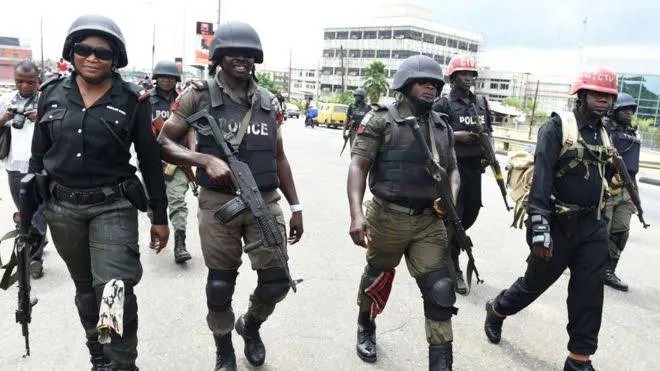

Momentum is building behind the proposed State Police Bill following endorsements by the Speakers of the 36 State Houses of Assembly, state governors, the Forum of APC Speakers and the Labour Party. The bill now enters a decisive phase, requiring the approval of at least 24 state assemblies before it can be transmitted to President Bola Tinubu for assent.
The Senate recently passed the Constitution Alteration Bill seeking to establish state police as part of efforts to decentralise policing and tackle worsening insecurity across Nigeria. The proposal also contains constitutional safeguards intended to prevent abuse and promote accountability.
The required number of state legislatures approve the bill, Nigeria could witness one of the most significant constitutional and security reforms since the return to democratic rule in 1999.
What Exactly Has Changed
The debate over state police has moved beyond political promises.
It is now approaching the final constitutional hurdle.
For decades, insecurity has exposed the limitations of Nigeria’s highly centralised policing structure. From terrorism in the North-East to banditry in the North-West, kidnapping in the South-East and violent crimes across the South-West and South-South, many Nigerians have questioned whether one centrally controlled police force can effectively secure a country as large and diverse as Nigeria.
The growing support from state assemblies signals that political resistance to state police may be weakening.
However, passing the bill is only the beginning.
The more difficult challenge will be ensuring that state police strengthen public safety rather than becoming instruments of political control.
History offers reasons for caution. Critics have repeatedly warned that without independent oversight, some governors could deploy state police to intimidate political opponents, suppress protests or interfere with elections.
Supporters counter that the current system has failed to adequately address insecurity and that local policing is essential because communities understand their security challenges better than distant command structures.
Both arguments carry weight.
The real issue is not whether Nigeria should have state police.
The real issue is whether Nigeria can establish a policing system that is professional, accountable, independent and insulated from political abuse.
Without strong institutions, changing the structure alone may not solve the country’s security crisis.
Five Things Every Nigerian Should Know
- The bill has entered a decisive stage
It now requires approval from at least 24 State Houses of Assembly before it can proceed for presidential assent. - Support for the proposal has widened
State assembly speakers, governors and major political stakeholders have publicly backed the constitutional amendment. - Nigeria still operates a centrally controlled police system
Despite governors being described as chief security officers of their states, operational policing remains under federal control. - The proposal includes safeguards against abuse
Backers argue that constitutional provisions have been inserted to promote accountability and prevent misuse of state police. - The success of state police will depend on implementation
Creating new police institutions alone will not automatically eliminate insecurity if governance, funding and oversight remain weak.
Reflective Questions Worth Sitting With
i. Will state police genuinely improve security, or simply create another layer of bureaucracy?
ii. Can constitutional safeguards realistically prevent political interference by state governments?
iii. If some states already struggle to fund essential services, how will they sustain professional police organisations?
iv. Should every state establish its own police, or should implementation depend on financial and institutional readiness?
v. Is Nigeria’s biggest security challenge the structure of policing or the quality of leadership and accountability?
vi. How will citizens seek justice if they believe a state police organisation has become politically compromised?
Akahi News Recommends
i. The constitutional amendment should include strong guarantees protecting state police from partisan control.
ii. Independent Police Complaints Commissions should be established in every state to investigate misconduct.
iii. Recruitment, promotions and disciplinary procedures should remain merit-based and transparent.
iv. Federal and state police agencies should have clearly defined responsibilities to avoid operational conflicts.
v. States should only establish police services after demonstrating financial capacity, operational readiness and compliance with national standards.
vi. Continuous legislative oversight and periodic performance reviews should be mandatory to ensure accountability.
vii. Nigerians should judge the reform not by political excitement but by whether it leads to safer communities, lower crime rates and greater public confidence in law enforcement.
Questions And Answers: Breaking Down The Policy
Who will be affected?
i. State governments.
ii. The Nigeria Police Force.
iii. State Houses of Assembly.
iv. Local communities.
v. Political stakeholders.
vi. Every Nigerian citizen.
What is the bill seeking to achieve?
i. Creation of state-controlled police services.
ii. Constitutional decentralisation of policing.
iii. Improved local security management.
iv. Stronger collaboration between federal and state security institutions.
When could state police become a reality?
i. After approval by at least 24 State Houses of Assembly.
ii. Following presidential assent.
iii. After states enact their own enabling laws and satisfy national standards.
Where will the bill be decided?
i. State Houses of Assembly.
ii. The constitutional amendment process.
iii. The Presidency after legislative approval.
Why is the proposal attracting nationwide attention?
i. Persistent insecurity across Nigeria.
ii. Growing dissatisfaction with centralised policing.
iii. Calls for stronger federalism.
iv. Concerns over possible political abuse.
v. Public demand for more effective and responsive security institutions.
How would state police operate if approved?
i. States would establish their own police services through legislation.
ii. Operations would be guided by constitutional provisions and national standards.
iii. Federal and state police would share security responsibilities based on their respective jurisdictions.