




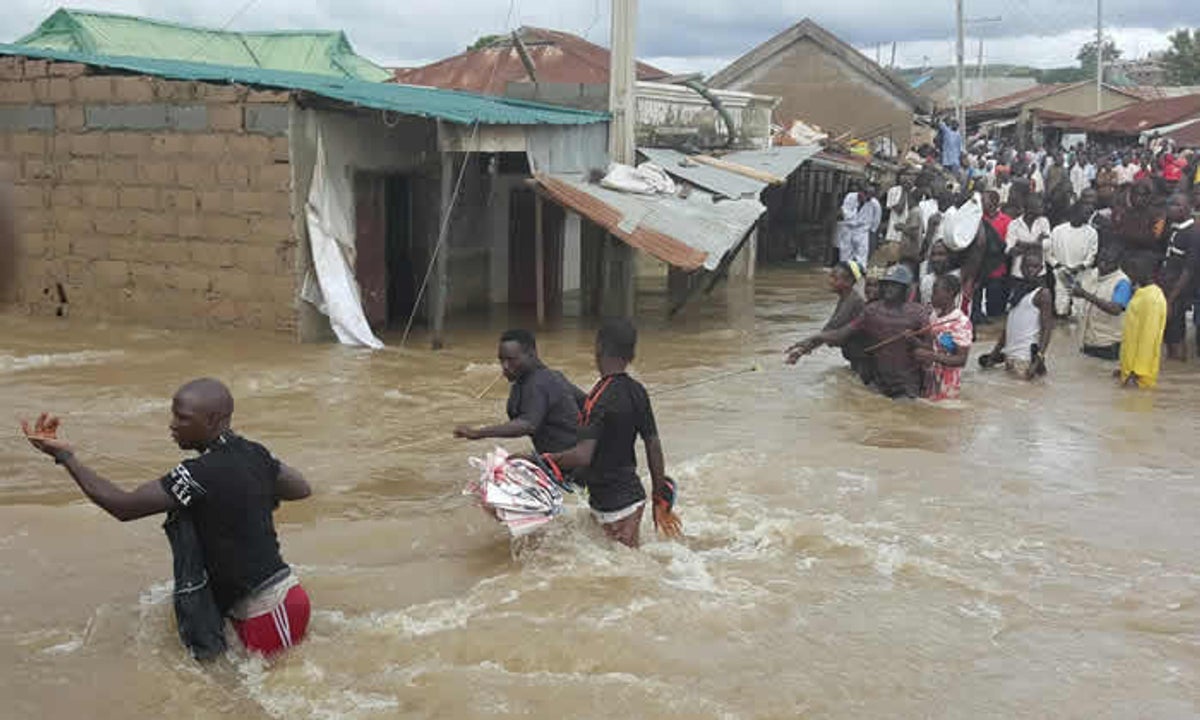

Despite repeated flood warnings and the release of nearly ₦100 billion in ecological funds to Nigerian states within just one year, devastating floods continue to wreak havoc across the country, raising serious concerns about how the money meant for disaster prevention is being spent.
On July 15, 2026, the Nigeria Hydrological Services Agency (NIHSA) issued another flood alert, warning that 14 states face a medium flood risk between July 14 and July 20. According to NIHSA Director-General Umar Mohammed, the warning is based on the agency’s latest hydrological forecast, which predicts localized flooding along major river channels and identifies 16 monitoring stations as high-risk areas requiring close surveillance.
The affected states include Adamawa, Akwa Ibom, Anambra, Bauchi, Benue, Borno, Cross River, Edo, Enugu, Imo, Kaduna, Lagos, Niger, and Plateau.
The warning adds to a growing list of official alerts highlighting Nigeria’s worsening vulnerability to climate-related disasters. Year after year, floods destroy homes, roads, schools, and farmlands, displace thousands of people, and claim hundreds of lives—even as billions of naira are allocated for ecological intervention projects.
Lagos, Nigeria’s commercial capital, has once again witnessed severe flooding, with several communities, including upscale neighborhoods, submerged after heavy rainfall. Residents have been stranded, reviving questions about the effectiveness of the state’s flood management strategy.
Nigeria has endured some of Africa’s worst flooding disasters in recent history. Following the catastrophic floods of 2022, UNICEF reported that more than 2.5 million people required humanitarian assistance. Around 60% of those affected were children, many of whom faced heightened risks of waterborne diseases, malnutrition, interrupted education, and limited access to healthcare.
The 2022 floods affected 34 of Nigeria’s 36 states, displaced approximately 1.3 million people, killed more than 600 people, and destroyed over 200,000 homes, leaving lasting humanitarian and economic consequences.
The threat remains significant. Hydrological experts estimate that more than 14,000 communities across 33 states and the Federal Capital Territory face varying levels of flood risk during the 2026 rainy season, underscoring the urgent need for preventive action.
As flood risks escalate, attention has once again turned to Nigeria’s Ecological Fund, which was created to finance projects addressing flooding, erosion, desertification, coastal degradation, and other environmental challenges.
For years, civil society organisations, anti-corruption advocates, and public finance experts have questioned whether the funds are translating into visible investments such as drainage systems, flood-control infrastructure, and erosion prevention projects.
An analysis by SaharaReporters of government allocation records shows that Nigeria’s 36 states received a combined ₦99.3 billion in ecological funds between June 2025 and May 2026, averaging about ₦8.28 billion every month.
Monthly allocations rose from ₦5.8 billion in June 2025 to ₦9.7 billion in May 2026, reaching a peak of ₦10.5 billion in April 2026. Overall, ecological fund disbursements increased by more than 67% during the 12-month period.
While allocations fluctuated throughout the year, seven months recorded disbursements above the annual monthly average, highlighting the substantial public resources made available for environmental protection.
The figures have intensified demands for state governments to explain how nearly ₦100 billion was spent and why many communities continue to experience devastating floods.
Although the National Economic Council recently approved an additional ₦83.2 billion under the Anticipatory Action Task Force to reduce the impact of future flooding, budget implementation reports suggest that several states have failed to utilize available resources effectively.
Kogi State received approximately ₦1.26 billion in ecological funds during the 2025 fiscal year but spent only ₦516 million of its ₦1.15 billion budget for erosion and flood-control projects—less than half of the planned expenditure.
The figures are particularly concerning given Kogi’s long history of destructive flooding. Budget records also show the state spent only ₦29.8 million on flood-control projects in 2024 and a mere ₦1.93 million in 2023.
In Adamawa State, only ₦68 million was spent out of a ₦1.3 billion budget for erosion and flood-control projects in 2025. Ironically, the state received about ₦239 million in ecological funds from the Federal Government in December 2025 alone, meaning its total annual spending on flood prevention was lower than a single month’s allocation.
Ondo State recorded one of the weakest performances. Although it budgeted ₦600 million for erosion and flood-control projects across several communities, budget records show zero implementation, despite receiving approximately ₦1.07 billion in ecological fund allocations during the same period.
In Cross River State, another area identified by NIHSA as being at flood risk, only ₦342 million of the ₦1 billion budgeted for erosion and flood-control projects was spent, representing less than 35% implementation.
The spending patterns across these states have renewed concerns over whether ecological funds are being converted into meaningful infrastructure capable of protecting lives and property.
According to the National Emergency Management Agency (NEMA), floods claimed 241 lives across Nigeria in 2025, highlighting the deadly consequences of recurring disasters and reinforcing calls for greater transparency in the management of ecological funds.
The Human and Environmental Development Agenda (HEDA) has also warned that Nigeria could be heading toward another nationwide flood disaster.
Speaking in Lagos, HEDA Executive Secretary Suleiman Arigbabu said the country faces a dangerous combination of climate change and governance failures. He noted that NIHSA’s flood forecasts have achieved more than 80% accuracy in recent years, making the latest warnings impossible to ignore.
“The recurring floods we see year after year are not accidental,” Arigbabu said. “They are the result of prolonged neglect and inadequate investment in preventive infrastructure.”
He attributed the worsening crisis to increasingly intense rainfall, poor drainage systems, failure to desilt rivers and dams, and years of inadequate investment in flood-control infrastructure.
As another rainy season unfolds, experts warn that unless ecological funds are transparently managed and invested in long-term preventive measures, Nigeria risks repeating a cycle in which billions are allocated, yet communities remain vulnerable to the same devastating floods every year.