





By Ugoesa Huxley Unumadu
Publisher/CEO, Insight Africa News Magazine
There is a point in the life of every society when political conversations must move beyond personalities and electoral calculations and confront a more fundamental question:
What kind of leadership can actually deliver the future the people deserve?
For Delta State, that question has become increasingly important.
The state is extraordinarily endowed. It possesses vast natural resources, strategic waterways, agricultural opportunities, human capital, cultural wealth, a commercially important location and significant industrial potential.
Yet potential is not prosperity.
Resources are not automatically development.
And political promises, however attractive, do not become roads, jobs, industries, functional institutions or improved living standards until someone has the capacity and discipline to execute them.
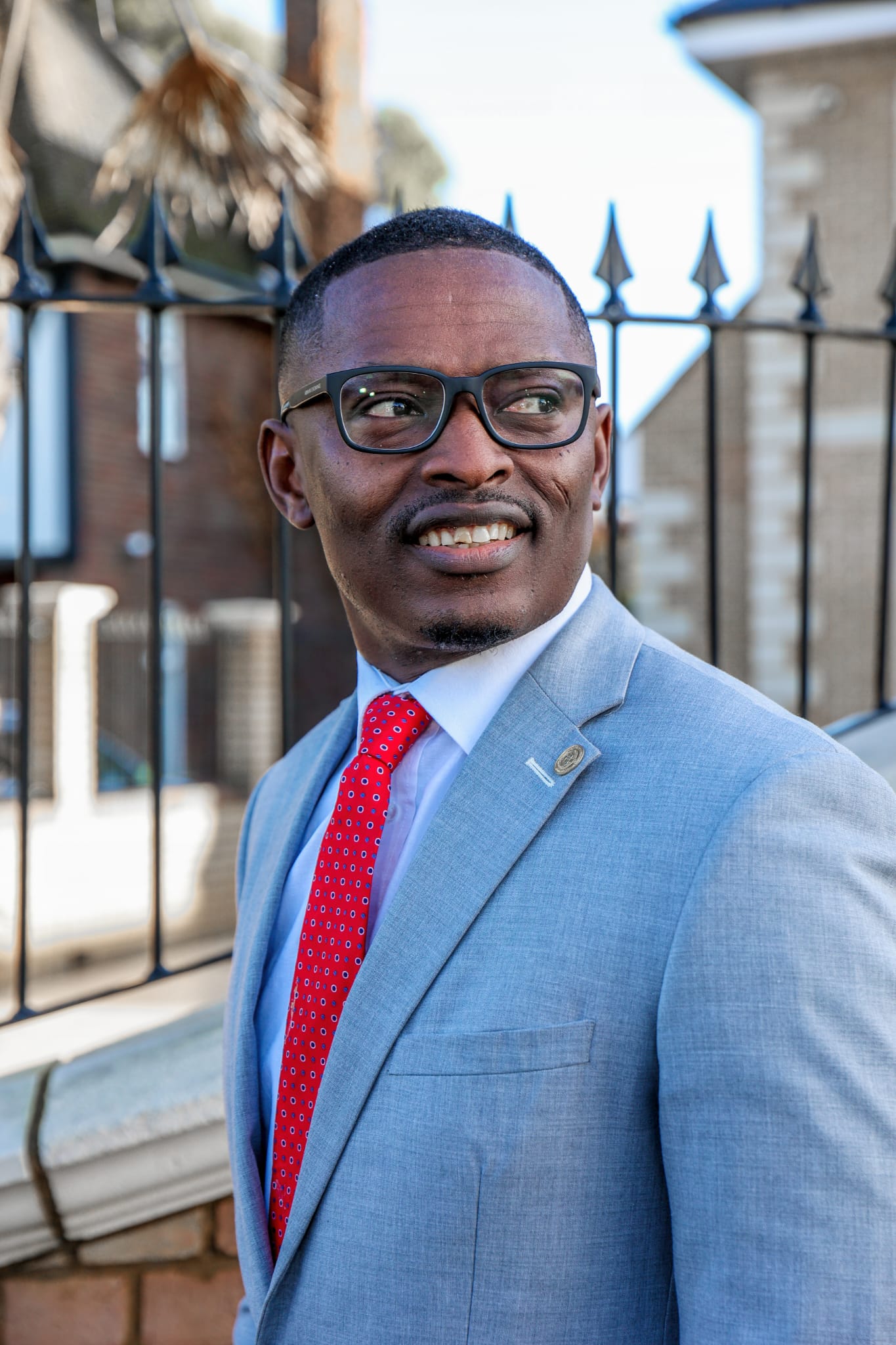
It is within this context that the emergence of Dr. Emmanuel Unuafe, the ADC Delta State Governorship Candidate, presents a different proposition for political conversation.
His central argument is straightforward but ambitious:
Delta State must be governed as a development project—with vision, strategy, measurable objectives, disciplined execution and accountability.
That proposition deserves serious examination.
GOVERNANCE AS THE BIGGEST PROJECT
When Insight Africa News Magazine asked whether a project-management scholar can manage the complex political and developmental enterprise called Delta State, Dr. Unuafe did not shy away from the question.
Instead, he embraced it.
His response is that governance is arguably the largest and most complex project any society can undertake.
A serious project requires a clearly defined destination.
It requires planning.
It requires resources.
It requires competent people.
It requires risk management.
It requires stakeholder coordination.
It requires monitoring.
And above all, it requires delivery.
Government, he argues, should operate by the same principles.
“A project manager does not simply announce ambitions; a project manager defines objectives, establishes timelines, allocates resources, manages risks, measures performance and ensures delivery.”
This is perhaps the most distinctive feature of the New Delta philosophy.
It seeks to replace the politics of announcement with the politics of implementation.
The difference is enormous.
A government can announce hundreds of projects.
But citizens ultimately experience only what is completed, functional and sustainable.
FROM POLITICS OF PROMISE TO POLITICS OF PERFORMANCE
For decades, African politics has often been dominated by magnificent promises followed by disappointing implementation.
The problem is rarely the absence of ideas.
The problem is execution.
Dr. Unuafe's proposition is that Delta State requires a government that understands the difference between policy, programme, project and outcome.
A policy establishes direction.
A programme coordinates interventions.
A project delivers something specific.
But the ultimate measure is the outcome.
Did employment increase?
Did agricultural productivity improve?
Did businesses become more competitive?
Did healthcare become more accessible?
Did education produce better opportunities?
Did infrastructure reduce the cost of doing business?
Did citizens experience a better quality of life?
These are the questions that should define government performance.
“The real test of leadership is delivery.”
That sentence may well become the defining principle of his political philosophy.
THE NEW DELTA: CONVERTING POTENTIAL INTO PROSPERITY
Delta State does not suffer from a shortage of assets.
It suffers from the challenge of converting assets into broad-based economic value.
The New Delta vision therefore begins with a fundamental proposition:
Potential must become productivity.
Natural resources must generate sustainable economic opportunities.
Waterways must become economic corridors.
Agriculture must become a commercial value chain.
Human capital must become productive capacity.
Culture must become an economic asset.
Technology must become a governance tool.
Infrastructure must become an investment catalyst.
And government must become an enabler rather than the permanent centre of economic activity.
This is a significant philosophical shift.
It suggests that the ultimate objective of government should not be to control the economy, but to create the conditions under which citizens and businesses can produce, invest, innovate and prosper.
INDUSTRIALISATION: BUILDING WHAT DELTA CONSUMES
For Dr. Unuafe, industrialisation cannot simply mean attracting companies to Delta State.
It must mean creating an environment in which industries can survive and grow.
Reliable infrastructure.
Affordable energy.
Efficient transportation.
Access to finance.
Skilled manpower.
Investment incentives.
Efficient regulation.
Market access.
These are the foundations upon which a productive economy is built.
The ambition should be to move Delta progressively from being primarily a consumer of finished products to becoming a producer, processor and exporter of value-added goods.
That means creating jobs beyond government.
It means developing local supply chains.
It means giving young people reasons to build their futures in Delta.
And it means creating an economy capable of generating wealth even when government revenue fluctuates.
AGRICULTURE: THE UNTAPPED ECONOMIC GIANT
Perhaps nowhere is the gap between potential and performance more obvious than agriculture.
Delta has land.
Delta has water.
Delta has farmers.
Delta has markets.
What is required is a modern system that connects all these assets.
Agriculture should no longer be treated simply as an activity of subsistence.
It should be treated as business.
Production must connect to processing.
Processing must connect to storage.
Storage must connect to logistics.
Logistics must connect to markets.
And the entire value chain must connect to finance, technology and insurance.
The farmer of the New Delta should therefore not merely be a beneficiary of government intervention.
The farmer should be an entrepreneur.
INFRASTRUCTURE THAT PRODUCES ECONOMIC VALUE
A modern government must also rethink infrastructure.
The question should not simply be:
How many roads were constructed?
The better question is:
What did those roads make possible?
Did they connect farmers to markets?
Did they reduce transportation costs?
Did they unlock communities?
Did they attract investment?
Did they increase property values?
Did they stimulate local businesses?
Infrastructure becomes transformative when it generates economic activity.
This is the project-management mentality applied to public development: every major project should have a clearly identifiable purpose and measurable outcome.
TECHNOLOGY AND THE GOVERNMENT OF THE FUTURE
The New Delta vision also recognises that government itself must evolve.
The world is becoming increasingly digital, and government cannot remain trapped in outdated bureaucratic systems.
Technology can reduce unnecessary bureaucracy.
It can improve transparency.
It can strengthen record-keeping.
It can make public services more accessible.
It can improve revenue collection.
It can help government make decisions based on data rather than assumptions.
The objective should not be technology for technology's sake.
The objective should be a government that is faster, smarter, more transparent and more accountable.
THE HUMAN BEING MUST REMAIN THE CENTRE
But development is not ultimately about roads, factories, technology or statistics.
It is about people.
That is why the most important question for any government should remain:
How does this improve the life of the ordinary Deltan?
A child receiving quality education.
A mother accessing affordable healthcare.
A farmer earning more from his harvest.
A young graduate finding meaningful employment.
A small business owner expanding his enterprise.
A community gaining access to reliable infrastructure.
A family living in a safer environment.
These are the real measurements of development.
The economy exists to serve people—not the other way around.
THE MONEY QUESTION
Every ambitious development agenda eventually encounters the same question:
Where will the money come from?
Dr. Unuafe's answer is pragmatic.
Development cannot be financed by wishful thinking.
Government must prioritise.
Projects must be ranked according to economic and social impact.
Public-private partnerships must be explored.
Strategic investments must be pursued.
Internally generated revenue must grow alongside economic productivity.
And public expenditure must be subjected to rigorous scrutiny.
The objective should not simply be to spend more.
It should be to achieve more with every naira.
That requires discipline.
It requires transparency.
And it requires a government willing to measure the value generated by its investments.
ACCOUNTABILITY: THE MISSING LINK
Perhaps one of the most important components of the New Delta proposition is accountability.
Democracy cannot mean citizens appear once every four years to vote and disappear from the governance process thereafter.
Citizens are stakeholders.
They deserve information.
They deserve measurable targets.
They deserve progress reports.
They deserve explanations.
They deserve results.
A government should be able to say:
This is what we promised.
This is what we have delivered.
This is what it cost.
This is the impact.
This is what remains to be done.
That is not merely good politics.
It is good management.
THE TECHNOCRAT MUST ALSO UNDERSTAND THE PEOPLE
There is, however, a legitimate challenge to the technocratic model.
Governance is not a spreadsheet.
People are not project variables.
Politics involves emotion, identity, culture, history, community interests, competing expectations and complex human relationships.
Dr. Unuafe acknowledges this.
His argument is not that technical expertise replaces political leadership.
Rather, he believes leadership should combine competence with listening, knowledge with humility, and strategy with grassroots engagement.
“Leadership is not about knowing everything; it is about listening, learning, bringing competent people together and delivering results.”
That distinction matters.
A leader does not need to personally possess every skill.
A leader needs to know how to build a team capable of solving problems.
THE NATIONAL CALL THAT BROUGHT HIM HOME
Behind the project-management philosophy is a personal story.
In 2012, at the President's NYSC National Honours Award Ceremony, former President Dr. Goodluck Ebele Jonathan recognised 52 young Nigerians as some of the country's bright stars.
The message, as Dr. Unuafe recalls it, was more than an award.
It was a charge.
Nigeria had invested in these young Nigerians.
It had provided opportunities for education, exposure and professional development.
The expectation was that they would eventually return that investment through service.
Dr. Unuafe says that message has remained with him.
He describes his return to public service through the biblical image of the one leper who returned to give thanks after being healed.
Nigeria gave him opportunities.
Now, he says, he wants to give back through service.
That makes his political ambition, at least in his own framing, less about occupying an office and more about deploying accumulated knowledge.
THE OFFICE IS NOT THE DESTINATION
This may be the most important distinction in his message.
Political office, by itself, is not an achievement.
Winning an election is not development.
Being appointed is not performance.
Holding power is not the same as using power effectively.
The ultimate question is what happens after the ceremony, after the inauguration and after the applause.
What changes?
What improves?
What gets delivered?
What becomes sustainable?
That is why Dr. Unuafe repeatedly returns to the language of results.
“My commitment is not simply to occupy office; it is to deliver measurable results.”
THE NEW DELTA TEST
The New Delta proposition can ultimately be reduced to five words:
VISION. STRATEGY. EXECUTION. MEASUREMENT. RESULTS.
That is the test Dr. Unuafe is placing before himself.
It is also the test that citizens should place before every political leader.
Because Delta State does not need another collection of beautiful promises.
It needs institutions that work.
It needs an economy that produces.
It needs infrastructure that unlocks opportunity.
It needs young people who can build meaningful futures.
It needs farmers who can prosper.
It needs businesses that can grow.
It needs transparent government.
And above all, it needs leadership that understands that political power is not the reward.
It is the responsibility.
THE FINAL QUESTION
Dr. Emmanuel Unuafe's project-management background may give him a different vocabulary for discussing governance.
But the ultimate test will not be academic.
It will not be theoretical.
It will not be ideological.
It will be practical.
Can the vision be financed?
Can the machinery of government execute it?
Can political interests be managed?
Can institutions be strengthened?
Can citizens be carried along?
Can measurable results actually be delivered?
These are the questions that time—and ultimately the people of Delta State—will answer.
For now, however, Dr. Unuafe has placed a compelling proposition on the table:
Delta State should no longer be managed merely as a political territory.
It should be managed as a development enterprise whose ultimate shareholders are its people.
And perhaps that is the real New Delta Question:
Not whether Delta has the resources to succeed.
Not whether Delta has the potential to prosper.
But whether its next generation of leadership can finally build the systems, discipline and political will required to convert potential into performance.
Because in the final analysis:
Ideas must become action.
Plans must become projects.
Projects must become results.
And results must become better lives for the people.
That is the politics of delivery.
That is the challenge of the New Delta.
And that is the conversation Delta State must now have.