




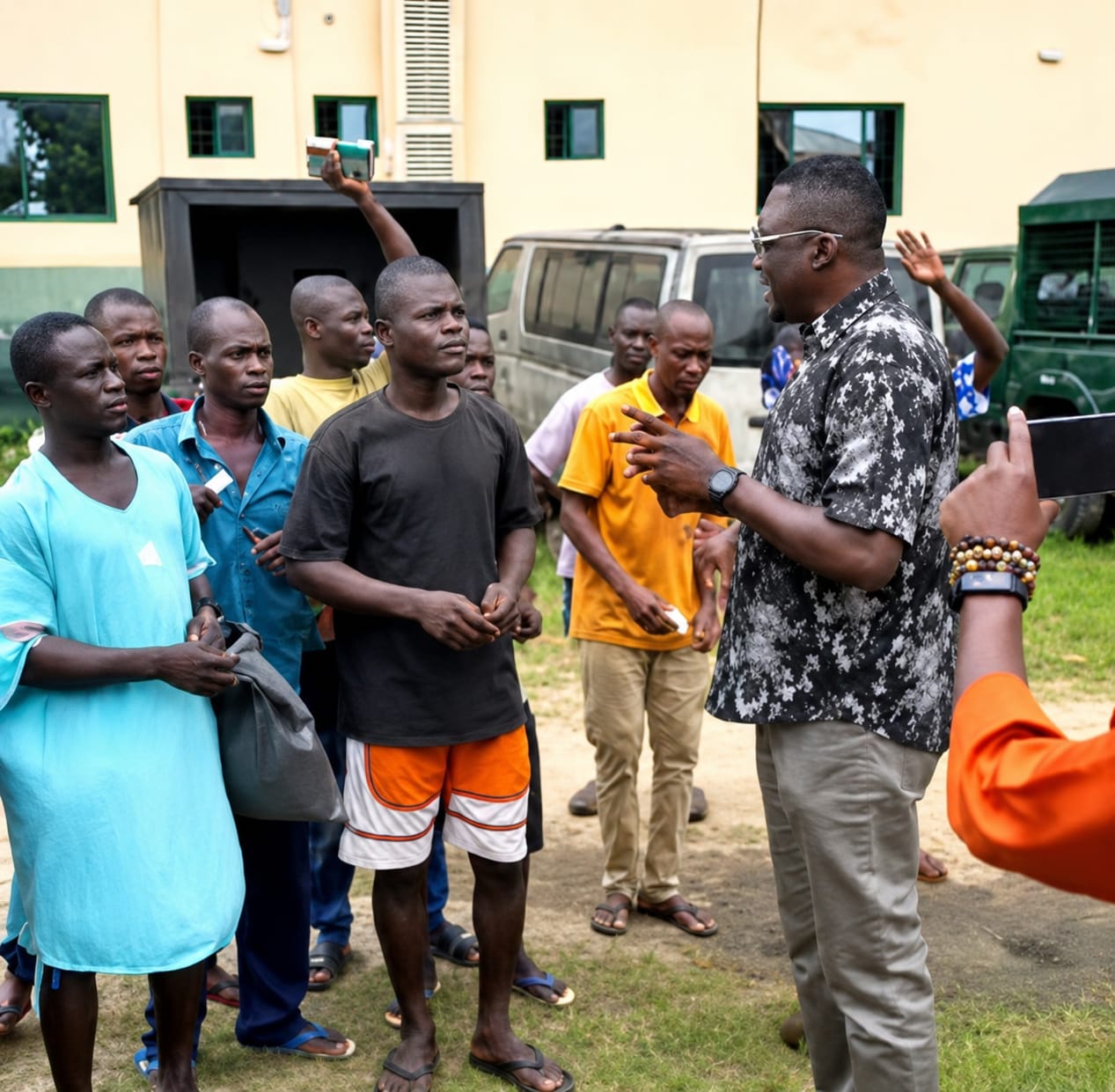

Some inmates who regained their freedom from the Correctional Centre after fines were paid on their behalf have received immediate financial and welfare support to facilitate their safe return and reintegration into society.
The inmates, whose offences were punishable by fines, were released following the payment of the required fines by FOOSTODEY in conjunction with
Comrade Reuben Izeze through the Ukodo na Tevwe Empowerment Programme, in an intervention aimed at giving them a fresh start.
In a further demonstration of the commitment of the administration of Governor Sheriff Oborevwori to its “Opportunity for All Deltans” vision, the Senior Special Assistant to the Governor on Mobilisation, Vincent Udume Odogbor, provided the freed inmates with transportation money and immediate welfare assistance.
Odogbor said the intervention was anchored on the conviction that genuine rehabilitation does not end at the prison gate, stressing that those who had served their time and demonstrated a willingness to turn a new leaf deserved the opportunity to rebuild their lives.
He noted that having spent considerable time in the Correctional Centre, the beneficiaries were returning to their communities at a critical point in their lives when practical support could make the difference between successful reintegration and a return to vulnerability.
According to him, providing transportation and immediate welfare assistance was not merely an act of compassion but a deliberate investment in rehabilitation, reintegration and the building of a safer and more inclusive society.
He said: “Everyone deserves a second chance. When people have paid their dues and are willing to turn a new leaf, society should not shut its doors against them.
“Our responsibility is to give them the support they need to return home, reconnect with their families and begin rebuilding their lives. This is what true compassion and responsible leadership should be about.”
Odogbor, who is a strong advocate for the re-election of Governor Oborevwori, said the intervention reflected the administration’s broader commitment to ensuring that no Deltan was left behind, regardless of their circumstances.
He stressed that creating opportunities for vulnerable citizens to regain their dignity and become productive members of society remained essential to achieving sustainable peace and development in the state.
The intervention also underscored the importance of community-based support for former inmates, particularly at the point of release when they often face economic hardship, social stigma and uncertainty about their future.
With the assistance provided, the beneficiaries were able to begin their journey home with some measure of dignity and hope, marking what supporters described as not merely the end of incarceration, but the beginning of a new chapter.
The initiative reinforces the message that rehabilitation is about more than punishment—it is also about restoration, reintegration and giving people the opportunity to make better choices.
For the freed inmates, the journey back into society has begun. And with a helping hand extended at the moment it mattered most, a second chance at life has become a reality.