




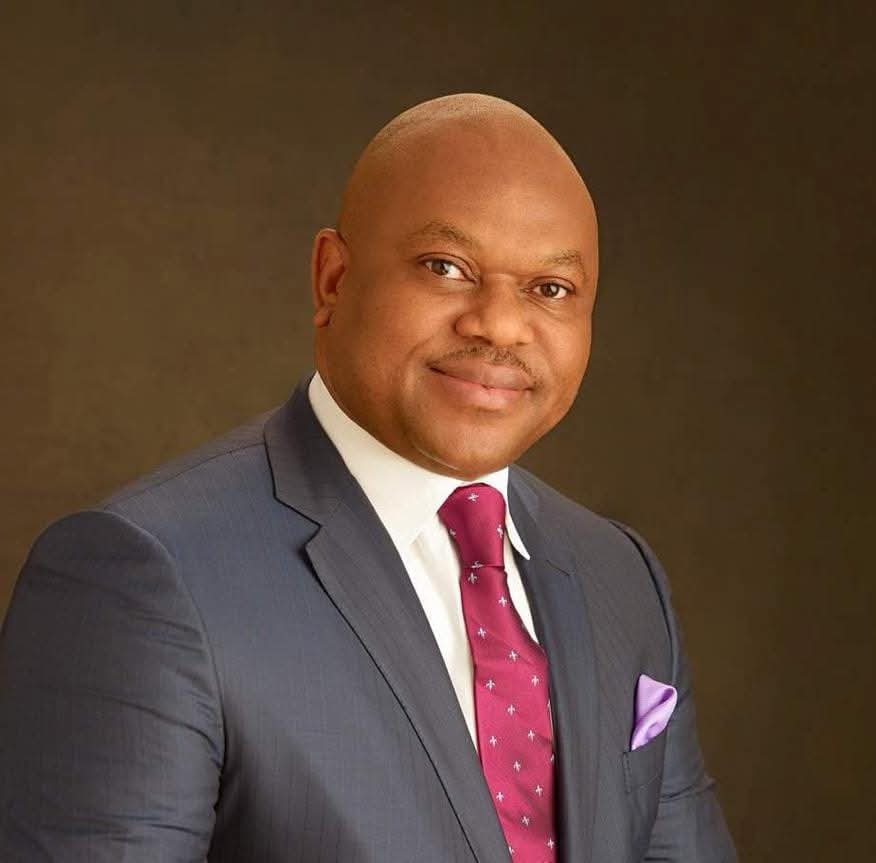

By Austine Ihonor
There is an old, weathered saying refined by generations of communal life in our towns and villages: “A single finger cannot lift a heavy stone.” For decades, the story of governance across Nigeria has run counter to this basic truth. Huge, expensive projects are dreamed up in executive boardrooms far away from the realities of the ground, only to end up abandoned, ignored, or entirely mismatched with what the people actually need.
True development cannot be packaged as a top-down gift. It has to grow naturally from the soil of the communities it is meant to serve.
This philosophy was front and center during a recent meeting between the Nigeria Democratic Congress (NDC) candidate for the Delta North Senatorial District, Rt. Hon. Victor Ochei, and local community Presidents-General. By rolling out a community-driven development plan, Ochei has opened up a vital and honest conversation about how our districts should be run. It shifts the entire dynamic away from rigid government directives toward an inclusive partnership.
The old English proverb tells us that “he who wears the shoe knows best where it pinches.” For too long, planners have been trying to fix problems in rooms they have never walked into.
Presidents-General live on the front lines of our communities.
They are the immediate keepers of local memory, everyday hardships, and grassroots hopes. Treating them as active co-architects of their district's future, rather than passive spectators, is simply common sense. It echoes the timeless words of Mahatma Gandhi, who noted that “the soul of a nation lives in its villages.”
In our own local context, the soul of sustainable development lives inside our towns, clans, and farming settlements.
When you let the grassroots lead, development stops being an exercise in guesswork.
Take agriculture, the very backbone of Delta North. Instead of handing down generic promises, Ochei’s plan tackles the real bottlenecks: setting up local processing hubs to turn cassava peels into animal feed and converting crop residues into compost.
This kind of localized waste-to-wealth focus protects farmers from being squeezed by middlemen and creates real jobs for young people. Most importantly, these facilities are designed to be owned by the participating farmers and communities themselves, not handed over as political favors to distant associates.
This approach also solves the biggest hurdle in public infrastructure: maintenance.
When a community is actively involved in planning, building, and owning a project, they naturally look after it.
Civic pride becomes the best security guard available, ensuring that rural roads, processing facilities, and storage hubs are protected long after the initial contractors move on.
Of course, a plan is only as good as its execution.
A map, no matter how beautifully drawn, cannot walk the road for us.
To make sure this blueprint leaves the pages and changes lives on the ground, the framework will have to stand firmly on transparency and clear, verifiable timelines.
Funding must flow directly to the projects without getting caught in bureaucratic bottlenecks, and there must be an open, honest loop of communication between community leaders and the representatives who serve them.
As the political thinker Edmund Burke once wrote, “To love the little platoon we belong to in society, is the first principle of public affections.” By engaging with these local "platoons," Ochei is offering a straightforward, courageous vision of what balanced public service should look like.
It respects the dignity of the ordinary citizen and recognizes that a great senatorial district is simply the sum total of its thriving communities.
If carried out with steady discipline and real transparency, this model could easily become the standard for how we build from the grassroots up.