




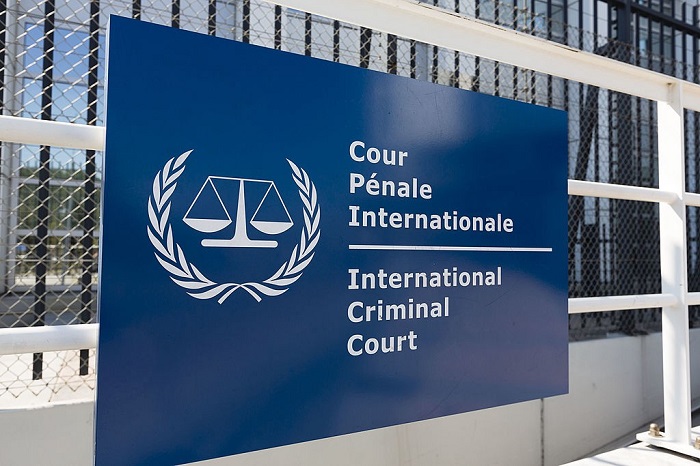

The administration of United States President Donald Trump on Friday, October 9, 2026, imposed sanctions on the International Criminal Court (ICC), hours after former court judge and South African jurist Navanethem “Navi” Pillay was awarded the 2026 Nobel Peace Prize for her work in international criminal justice.
The move marks a significant escalation in Washington’s longstanding opposition to the court, which has previously seen its prosecutors and judges targeted by US sanctions. The latest measures extend to the institution itself and could affect companies providing services to it.
US sanctions generally prohibit American companies from conducting business with designated organisations. Such restrictions can force banks to close accounts, insurers to withdraw coverage and software providers to suspend cooperation, potentially disrupting the court’s operations.
A senior State Department official said the US Treasury would issue licences “to protect American interests”, apparently referring to temporary exemptions from some of the restrictions.
The European Commission said it believed there was still room for dialogue, noting that the sanctions would not take effect for six months.
US Secretary of State Marco Rubio announced the measures in a statement, declaring that President Trump would not allow the ICC to prosecute Americans.
“President Trump will never allow the International Criminal Court to prosecute Americans. That is why, today, the United States is sanctioning the International Criminal Court. We will ban transactions with this rogue court, cutting off their resources and crippling its ability to operate,” Rubio said.
He added: “Either the ICC will end its threats, or we will end the ICC. We expect our allies, many of whom are part of the ICC and that rely on American service members for their defense, to rein in the court.”
Rubio said Washington had structured the sanctions to give member states an opportunity to negotiate and address American concerns.
“We have structured this action to provide an opportunity for States Parties to negotiate and present a solution to address our concerns. If these efforts do not bear fruit, we will continue to adjust accordingly,” he said.
According to Rubio, the United States had delayed imposing the measures in the hope that the court and countries party to its founding Rome Statute would address Washington’s concerns. He said those efforts had failed but did not provide further details about the proposed negotiations or the conditions required to avert the sanctions.
The White House did not immediately respond to a request for comment.
Washington has long opposed the ICC’s investigations and actions involving American and Israeli officials. Among its principal grievances are arrest warrants issued for Israeli officials, including Prime Minister Benjamin Netanyahu, over alleged war crimes in Gaza, as well as an earlier investigation into the conduct of US soldiers in Afghanistan, which the court has since closed.
During Trump’s first term, his administration imposed targeted sanctions on ICC officials. Those measures were rescinded under former President Joe Biden, but Trump’s administration announced fresh sanctions after he returned to office in 2025.
The court has also faced criticism from both major political parties in the United States. Biden previously condemned the ICC for issuing arrest warrants against Israeli officials in connection with the war in Gaza, which followed the Hamas-led attack on Israel on October 7, 2023.
Netanyahu welcomed Washington’s latest action. His office wrote on X that the ICC was not a court but a political body that posed a mortal threat to law-abiding democracies and the principle of national sovereignty.
The sanctions announcement came hours after Pillay received the 2026 Nobel Peace Prize in recognition of her work in international criminal justice. Pillay served as a judge on the ICC’s Appeals Chamber from 2003 to 2008.
In announcing the award, the Norwegian Nobel Committee said it sought to “issue a reminder” at a time when “judges and institutions of international law are under political attack”.
The committee also stressed the importance of accountability for international crimes, stating: “An international legal system in which war criminals are held to account and the victims of abuse see justice served is a precondition for a peaceful world.”
Speaking at a press conference on October 9, Pillay warned that efforts to undermine the international legal system “risk returning us to a world in which power rather than law determines whose suffering matters”.
The timing of Washington’s announcement, coming just hours after the Nobel award, has prompted questions about whether the decision to honour a former ICC judge rather than Trump played any role in the administration’s response. Trump has repeatedly complained about not receiving the Nobel Peace Prize and has openly campaigned for the award.
Pillay recently served as chair of the United Nations Independent International Commission of Inquiry on the Occupied Palestinian Territory. The commission concluded that Israel had committed genocide in Gaza, an allegation Israeli officials have rejected. Israel has also accused the United Nations of spreading lies and promoting antisemitism.
Health officials in Gaza say at least 74,000 Palestinians, including more than 18,000 children, have been killed over the past three years.
The ICC strongly condemned the US sanctions, describing them as an attempt to obstruct justice and undermine the international legal system. It called on its member states to take action to ensure that the institution could continue operating.
In a statement, the court said: “It is an attempt to obstruct the course of justice and to prevent the Court from doing what it was created to do. It is an assault on the rule of law and on the very foundations of the international legal order.”
The ICC added that its future depended not only on the institution itself but also on the countries that established it.
“The Court cannot stand alone. Its fate now rests also in the hands of the states that created it,” the statement said.
The court warned that the dispute extended beyond its own operations, arguing that the sanctions threatened the broader international system based on the rule of law.
“This is not just about defending a single institution, but about safeguarding the international order grounded upon the rule of law. History will judge this moment. Future generations, and above all the victims of mass atrocities, will ask how we responded when an institution created to protect them came under attack,” it said.
The ICC said it would continue to “fully discharge its mandate” but acknowledged that it could not do so without support from member states.
Court officials have reportedly spent months preparing for the possibility of sanctions against the institution. Their contingency plans include replacing Microsoft software on office computers with open-source alternatives and making alternative arrangements for banking and health insurance.
The court’s Registrar, Osvaldo Zavala Giler, earlier this week urged the European Union to prepare to activate a so-called “blocking mechanism”. Such a mechanism is designed to shield European countries and companies from the extraterritorial effects of certain foreign sanctions.
The European Union said it was prepared to take any necessary measures to ensure that the court could continue its work.
Norwegian Foreign Minister Espen Barth Eide described the announcement as deeply concerning. He said Norway was working with other countries to assess how best to support and protect the ICC and whether the sanctions could be prevented from taking effect.
The foreign ministers of Canada, Denmark, Germany, France, Italy, Japan, the Netherlands and Britain also issued a joint statement reaffirming their support for the court.
“If put into effect, these sanctions will have a significant impact on the Court’s work, its dedicated staff and their families. They work every day to bring those accused of the most serious international crimes to justice and to support their victims,” the ministers said.
Amnesty International also condemned the move. The organisation’s representative, Erika Guevara Rosas, said the sanctions were intended to isolate and ultimately destroy the ICC.
“This existential attack must fail. States must take concrete action to resist the imposition of these measures,” she said.
Established in 2002, the ICC prosecutes individuals accused of genocide, crimes against humanity and war crimes. It is headquartered in The Hague, Netherlands, and has 125 member states, formally known as states parties.
All European Union member states are parties to the court, as are all NATO members except the United States and Turkey.
The ICC has issued arrest warrants in several international cases. In March 2023, it issued a warrant for Russian President Vladimir Putin over the alleged unlawful deportation and transfer of children from occupied Ukrainian territory following Russia’s full-scale invasion of Ukraine.
The United States, Israel, Russia and Sudan signed the Rome Statute but subsequently notified the United Nations that they did not intend to become parties. The United States and Israel did so in 2002, Sudan in 2008 and Russia in 2016.
These notifications differ from formal withdrawals by countries that had ratified the treaty. Burundi and the Philippines have completed withdrawals, while other countries have announced plans to leave.
The distinction is significant because signing a treaty without ratifying it, notifying the depositary that a country does not intend to become a party, and withdrawing after ratification are separate legal processes.