




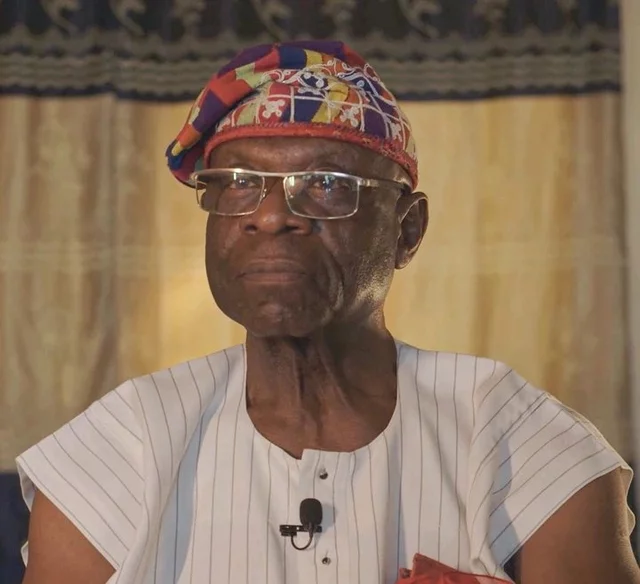

General Alabi-Isama, former commander of the Third Marine Commando Division during the Nigerian Civil War, has highlighted the often-overlooked contributions of women in sustaining the division’s operation s.READ THE, FULL ARTICLE <<[HERE]>>
In an interview with journalist Edmund Obilo, General Isama shared how 56 women were recruited to play crucial roles, particularly in communications and in feeding soldiers under extremely challenging conditions in the mangrove forests.
The story begins with an amusing and revealing incident involving General Isama’s mother. According to him, the division initially had male orderlies responsible for preparing and serving meals.
One day, his mother visited, and an orderly served her food. She looked at it and asked, “Is that my food?” When told yes, she refused to eat, citing cultural taboos from Ilorin that forbade women from consuming food cooked by men.
“This incident made us rethink our approach,” General Isama explained. “She decided to go to Adekunle in Calabar, asking, ‘Why don’t we have women?’ Adekunle explained, but finally saw her point and radioed Lagos.
The reply came that we could recruit as many as we wanted.” The division subsequently enlisted 56 women, a decision that proved to be vital for operational success.
The women recruited performed essential duties that went far beyond cooking. One of their most critical tasks, Isama said, was fetching firewood in the rain to prepare meals for soldiers.
“Where was the dry wood? Where was the kerosene? Where was the petrol to cook? We were feeding the soldiers using the women,” he noted.
These efforts ensured that the division remained supplied and that morale stayed high, even in the harsh and isolated conditions of the mangrove forests.
General Isama emphasized that the women’s contributions were indispensable to the division’s ability to maintain combat readiness.
By taking on the arduous work of gathering fuel, preparing food, and supporting communications, the women allowed soldiers to focus on military operations, significantly contributing to the division’s effectiveness.
He described the women as the “most important” reason the division could feed its soldiers, given the logistical challenges of operating in remote and difficult terrain.
Without their involvement, sustaining large numbers of troops would have been exponentially more difficult, particularly in a landscape where resources like dry wood and fuel were scarce.
The story also highlights a broader cultural context in which gender norms intersected with military necessity.
General Isama’s mother’s refusal to eat food cooked by a man triggered a policy change that opened the door for women to be formally incorporated into the division’s operations. This decision, born out of a combination of cultural sensitivity and practical necessity, became a turning point in ensuring the division’s sustainability.
Beyond their functional contributions, the recruitment of women in the Third Marine Commando also symbolized adaptability and innovative thinking within military leadership.
By recognizing and addressing cultural considerations, the division improved both morale and efficiency, showing that leadership in wartime often involves creative solutions to unexpected challenge s.