
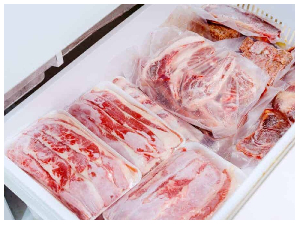
Putting meat in the freezer is one of the most common ways of preserving it, but freezing does not mean the food will maintain its original quality forever.
According to food-safety guidance, meat that remains continuously frozen at the recommended temperature can remain safe for a very long time, but its taste, texture and overall quality can gradually deteriorate during extended storage.
This means that the meat stored at the back of a freezer for months may not necessarily be unsafe simply because it has been there for a long period. However, it may no longer have the same quality as when it was first frozen.
One of the easiest ways to keep track of frozen meat is to write the month and year on each package before putting it into the freezer. This makes it easier to identify older items and use them before newer purchases.
Proper packaging is also important. Meat should be protected from air and moisture as much as possible because prolonged exposure can contribute to freezer burn. Freezer burn can leave parts of the meat dry and affect its texture and flavour, even though it does not automatically mean the food is unsafe.
Different types of meat also have different recommended storage periods for the best quality. For example, USDA guidance recommends that beef steaks and roasts generally be used within about nine to 12 months for best quality, while ground beef is best used within three to four months. If continuously frozen at 0°F (-17.8°C) or below, beef can remain safe indefinitely, although quality can decline.
Chicken has similar considerations. Whole chicken is generally recommended for up to a year in the freezer for best quality, while chicken pieces are recommended for up to nine months and ground chicken for around three to four months.
Fish and seafood can also remain safe while continuously frozen, but their flavour and texture can deteriorate with lengthy storage. Recommended periods for best quality vary depending on the type of seafood.
The temperature of the freezer is another important factor. Food-safety authorities recommend keeping a freezer at 0°F (-17.8°C) or below. At that temperature, properly handled frozen food remains safe while frozen, although recommended storage periods are mainly intended to preserve quality.
Thawing is equally important. Frozen meat should not simply be left on the kitchen counter for extended periods. Safe thawing methods include using the refrigerator, cold water or a microwave, depending on the food and circumstances. Once meat begins to thaw and becomes warmer, bacteria that may have been present before freezing can become active again.
For households that regularly store meat, keeping an organised freezer can therefore make a significant difference. Labelling packages, using suitable freezer packaging and rotating older food to the front can help reduce waste and maintain better food quality.
So, while meat kept continuously frozen does not necessarily become unsafe simply because it has been stored for a long time, freezing is not a guarantee of perfect quality forever. Paying attention to storage time, packaging and proper thawing can help households keep frozen meat in better condition and handle it safely.