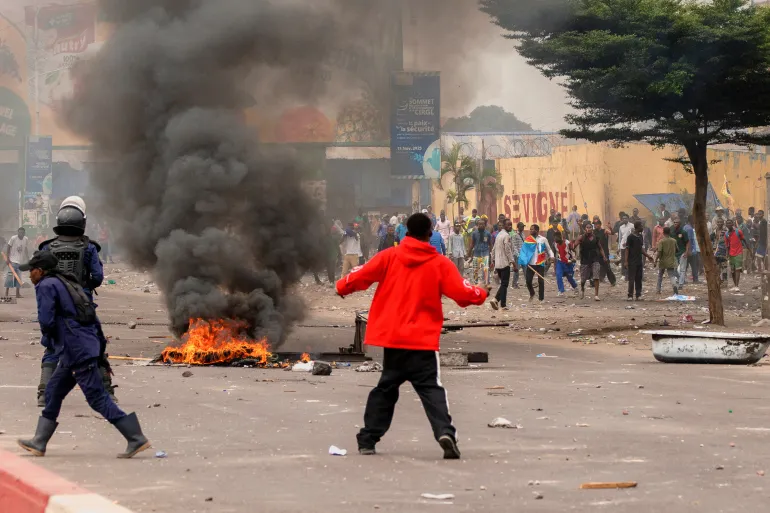
Thousands of people reportedly took to the streets in the Democratic Republic of Congo on Tuesday as opposition groups demonstrated against proposed constitutional changes linked to President Félix Tshisekedi’s administration.
The demonstrations reportedly took place amid growing political tensions over concerns that changes to the country’s Constitution could potentially affect existing presidential term limits.
Police responded to the protests in parts of Kinshasa with tear gas, warning shots and arrests, according to reports. Clashes were also reported between opposition demonstrators and supporters of the ruling camp as tensions rose during the demonstrations.
The protests were organised by the C64 opposition coalition, which has accused President Tshisekedi of pursuing constitutional reforms that could create a path for him to seek a third term in office.
Tshisekedi, who became president in 2019 and was re-elected in 2023, is currently serving under the country’s existing constitutional framework, which limits a president to two terms.
The debate over constitutional reform has therefore become a major political issue in the country, particularly among opposition groups that fear changes could alter the rules governing presidential elections.
Opposition leaders have argued that any attempt to modify the constitutional provisions relating to presidential terms could have serious consequences for the country’s political stability.
The latest demonstrations reflect the growing disagreement between the government and opposition over the proposed reforms. Protest organisers have called on citizens to resist any changes they believe could weaken presidential term limits.
Security forces were deployed to manage the demonstrations, with reports of police using tear gas and making arrests. The use of warning shots during the confrontation has also raised concerns among opposition groups and other observers.
The situation in Kinshasa remains politically sensitive as authorities seek to maintain public order while opposition groups continue to challenge the government’s position on constitutional reform.
The dispute comes at a time when the Democratic Republic of Congo is already dealing with significant political and security challenges. The country has experienced periods of political tension surrounding elections and constitutional issues, making debates over presidential succession particularly sensitive.
Opposition leaders have warned that attempts to alter presidential term limits could lead to a broader political crisis, while supporters of the proposed constitutional changes are expected to defend the government’s right to pursue reforms.
The controversy is likely to remain a major issue in Congolese politics as discussions over the Constitution continue.
For now, the protests have highlighted the depth of opposition concerns surrounding the proposed changes and demonstrated the potential for the constitutional debate to trigger further political confrontation.
Further developments are expected as opposition parties, government officials and civil society groups continue to respond to the proposed reforms.