




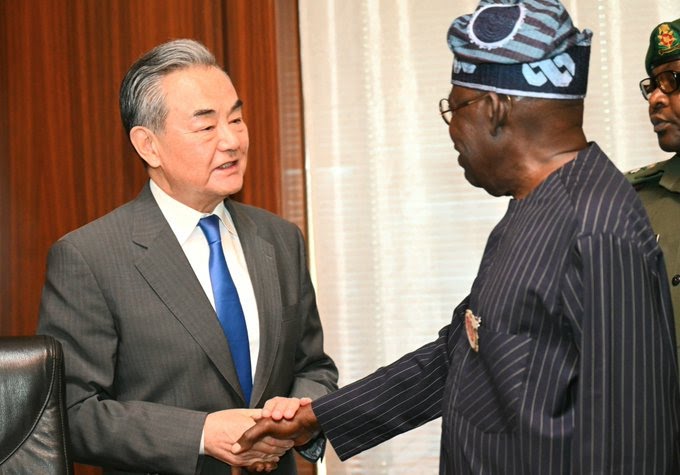

China is committed to collaborating with Africa to advance global climate governance, emphasizing the principles of equity and common but differentiated responsibilities. Chinese Foreign Minister
Wang Yi stressed the need for developed nations to acknowledge their historical responsibilities and fulfill their obligations by providing financial, technological, and capacity-building support to developing countries, particularly in Africa.
Wang made these comments during an interview with Chinese media following his visits to Namibia, the Republic of the Congo, Chad, and Nigeria. He highlighted that Africa is one of the most severely impacted regions by climate change, facing recurring challenges such as droughts, floods, and food shortages. Addressing climate change and enhancing agricultural cooperation are critical priorities for China-Africa collaboration in promoting modernization.
Both parties have agreed to fully implement initiatives like the Partnership Action for Green Development and the Partnership Action for Agriculture and Livelihoods, proposed by Chinese President Xi Jinping at the Forum on China-Africa Cooperation (FOCAC) Summit held in Beijing last year. These initiatives reflect China’s commitment as a responsible global power and its dedication to building a China-Africa community with a shared future.
China has prioritized eco-environmental conservation and green development, supplying over 70% of the world’s wind power equipment and 80% of global photovoltaic components. Wang noted that China’s successful green development practices provide valuable insights for Africa’s energy transition, citing the 1.5 gigawatts of photovoltaic power plants built jointly with African nations.
China is also committed to supporting Africa’s green and low-carbon development by advancing projects like the Partnership Action for Green Development and the “Africa Solar Belt” initiative.
In the agricultural sector, Wang outlined China’s focus on five key areas: food security, poverty reduction, capacity building, trade facilitation, and partner networks. He expressed confidence that Africa, with its vast agricultural potential, could achieve food security and ensure its food supply remains under its own control, just as China has done by feeding 20% of the global population with less than 9% of the world’s arable land.