




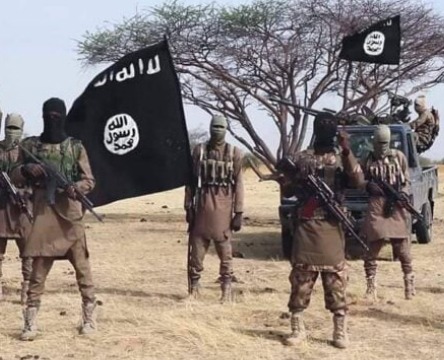

Nigeria’s sanctions authorities have published a list of 48 individuals and organisations suspected of financing terrorism, as part of efforts to disrupt funding networks linked to insurgency and separatist activities.
The Federal Government has released a list of 48 individuals and entities allegedly connected to terrorism financing, marking a significant escalation in Nigeria’s ongoing crackdown on financial networks supporting violent groups.
The list, published by the Nigeria Sanctions Committee (NIGSAC), identifies persons and organisations suspected of facilitating or supporting extremist operations across different parts of the country.
High-Profile Names on List
Among those named is Simon Ekpa, a Finland-based separatist figure linked to a faction of the Indigenous People of Biafra (IPOB).
Ekpa was previously convicted by a Finnish court over terrorism-related offences, with authorities finding him guilty of inciting violence and participating in the activities of a terrorist organisation.
Also listed is Tukur Mamu, a Kaduna-based publisher currently standing trial in Nigeria over allegations of providing financial and logistical support to terrorist groups.
Mamu, who was arrested in 2022, has consistently denied the charges brought against him by the government.
Other Individuals Identified
The sanctions list includes several other individuals across different regions of the country, reflecting what authorities describe as a broad network of alleged financiers and facilitators.
Among those named are Abdulsamat Ohida, Mohammed Sani, Abdurrahaman Abdurrahaman, Fatima Ishaq, Yusuf Ghazali, Abubakar Muhammad, Sallamudeen Hassan, Adamu Ishak, Hassana Isah, Abdulkareem Musa, Umar Abdullahi, Bashir Yusuf, Ibrahim Alhassan, Salihu Adamu, Surajo Mohammad, Fannami Bukar, Muhammed Musa, Sahabi Ismail, Mohammed Buba, Adamu Hassan, Hassan Mohammed, Usman Abubakar, Kubara Salawu and Rabiu Suleiman.
Others from the South-East region include Simon Njoku, Godstime Iyare, Francis Mmadubuchi, John Onwumere, Chikwuka Eze, Edwin Chukwuedo, Chiwendu Owoh, Ginika Orji, Awo Uchechukwu, Mercy Ali, Ohagwu Juliana, Eze Okpoto, Nwaobi Chimezie and Ogumu Kewe.
Organisations Under Scrutiny
Beyond individuals, the list also features several groups previously linked to insurgency and extremist activities.
These include Islamic State West Africa Province (ISWAP), Ansarul Sudan, and Jama’atu Wal-Jihad, as well as IPOB and affiliated networks such as Yan Group and Yan Group NLBDG.
Authorities have long accused these organisations of operating funding pipelines that sustain violent campaigns, including attacks on civilians, security forces and infrastructure.
Crackdown on Terror Financing
The publication of the list comes amid intensified efforts by Nigerian authorities to dismantle financial systems that enable terrorism and organised violence.
Security analysts say targeting funding channels is a critical component of counter-terrorism strategy, as it disrupts recruitment, logistics, weapons procurement and operational planning.
Nigeria has faced persistent security challenges for over a decade, particularly in the North-East where insurgent groups remain active, as well as in other regions affected by banditry and separatist agitations.
In response, the government has increasingly focused on financial intelligence, surveillance and sanctions as tools to weaken these networks.
Legal and Enforcement Implications
While inclusion on the sanctions list does not automatically imply conviction, it typically triggers restrictions such as asset freezes, financial surveillance and limitations on transactions involving listed individuals or entities.
Experts note that such measures are often implemented in line with international counter-terrorism frameworks, including compliance with global anti-money laundering standards.
Authorities are expected to collaborate with financial institutions and international partners to monitor and restrict transactions linked to those named.
Regional and Global Context
The move aligns with broader global efforts to combat terrorism financing, particularly in regions where extremist groups have adapted by relying on informal financial systems and cross-border networks.
Nigeria, as one of Africa’s largest economies, plays a critical role in regional security, making the disruption of such networks a priority not only domestically but also internationally.
The inclusion of individuals based outside Nigeria, such as Ekpa, highlights the transnational nature of modern security threats and the growing importance of international cooperation.
Ongoing Security Concerns
Despite ongoing military operations against insurgents, authorities have repeatedly acknowledged that financial support structures remain a major challenge in the fight against terrorism.
Analysts argue that while battlefield successes are important, long-term security gains depend heavily on cutting off funding sources that sustain armed groups.
What Comes Next
The release of the sanctions list is expected to trigger further investigations and enforcement actions by security and financial regulatory agencies.
For those named, the implications could include increased scrutiny, legal proceedings and restrictions on financial activities.
For the government, the challenge will be ensuring that the measures translate into tangible outcomes in reducing violence and restoring stability