



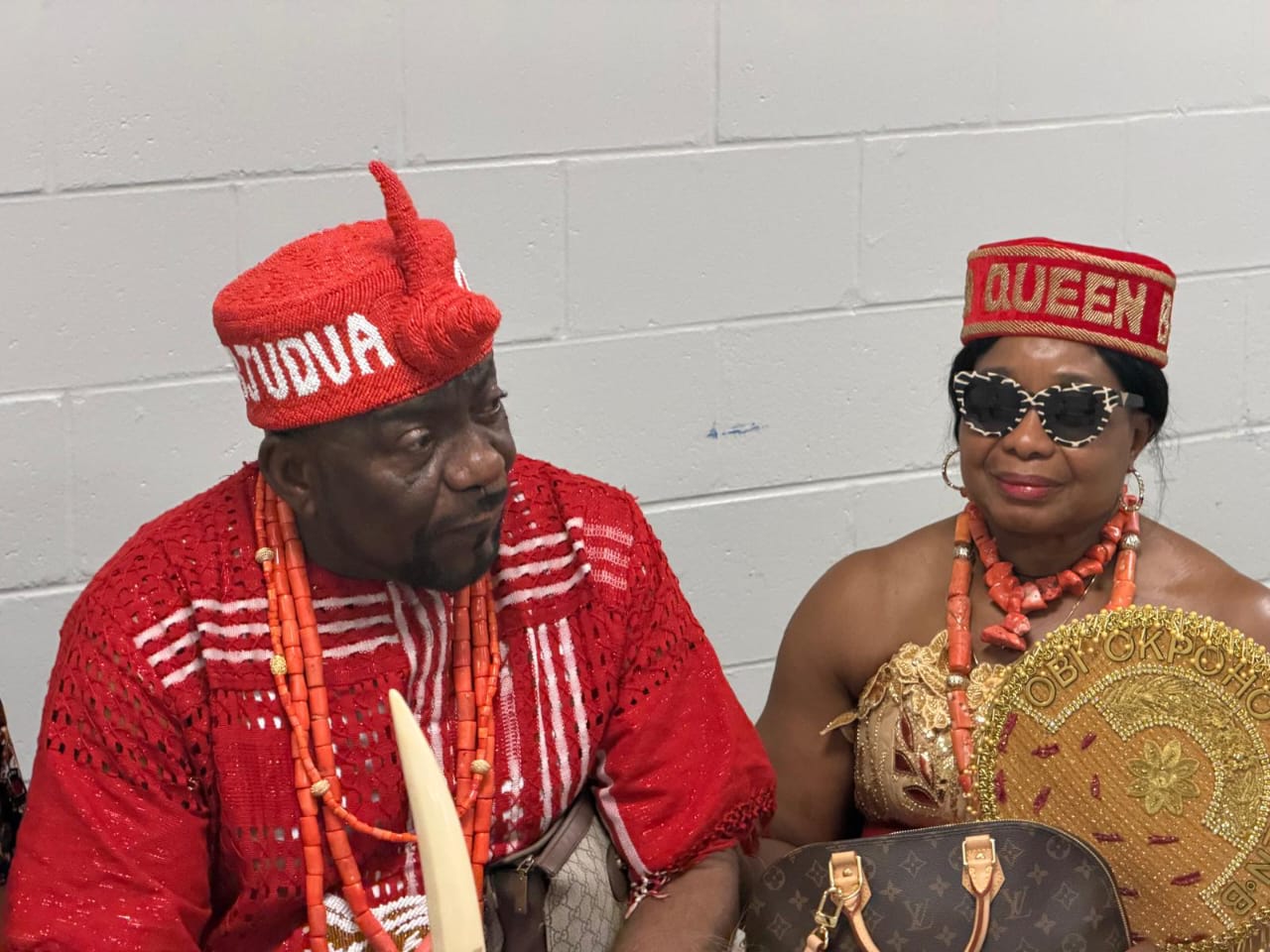

In the fertile, ancestral enclave of Ibusa (Igbuzor) in Delta State, where history breathes through ancient customs and the rustling fronds of the oil palm, a profound cultural renaissance is being stewarded.
At its center stand Obi (Dr.) Henry Chukwuma Ajudua (Obi Eze Udo I of Igbuzo) and his remarkable wife, Obi Okpoho Dr. Vivian Onyebuchi Henry-Ajudua.
As they prepare to lead their people in the sacred observance of the Ifejioku and Iwaji festivals, this royal couple embodies a rare truth: that civilization is measured not merely by concrete and commerce, but by the fidelity with which a people guard the fire of their traditions. Styled in the rich, evocative narrative traditions of global chronicles, their journey is an exploration of heritage, harmony, and unyielding philanthropic grace.A man of great candour and unassailable integrity, Obi Dr. Henry Ajudua moves through the worlds of modern enterprise and traditional leadership with an unshakeable moral compass. As an old English proverb reminds us, "Integrity is doing the right thing, even when no one is watching." Alongside him, Queen Vivian walks with an elegance that mirrors the timeless wisdom of the adage, "Grace is the beauty of form under the influence of freedom." Together, their household overflows with the milk of human kindness—a deep, instinctual empathy that echoes Jean de La Fontaine’s sentiment that "they are never alone that are accompanied with noble thoughts." When they look at community struggles, they respond with immediate, life-changing action.
Culture is a fragile inheritance; left untended, it fades into memory. Recognizing this, Obi Dr. Henry Ajudua and Queen Vivian have undertaken a 21st-century revitalization of the traditional Obiship and community values of Ibusa, living by the British idiom that "a people without the knowledge of their past history, origin, and culture is like a tree without roots." Their lives serve as a bridge between the deep antiquity of the Enuani people and the demands of modern global citizenship.As they step forward to herald the Ifejioku (the ancient festival celebrating the yam deity and agricultural vitality) and the subsequent Iwaji (New Yam Festival), they do so with a profound understanding of indigenous ontology. As the old English proverb notes, "To plant a garden is to believe in tomorrow," and on these historic farms, the yam remains the ultimate symbol of wealth, resilience, and communal continuity.
By personally underwriting and actively participating in these agrarian rites, the Ajuduas ensure that the younger generation views the soil not as dirt to be escaped, but as a sacred text of identity and abundance—proving that "what is planted in the heart of a child will sprout in the life of a nation."
Their cultural footprint recently scaled international heights when they attended the Council of Igbo States in the Americas (CISA) Worldwide Festival of Arts and Culture in the United States as Royal Guests of Honour and Cultural Ambassadors. There, they carried the banner of the Anioma Nation to the global stage, demonstrating that indigenous roots can stretch across continents without losing a single drop of their native flavor, much like the English proverb stating that "a good name is better than riches."
In a world fractured by suspicion and noise, the Ajudua household operates as a sanctuary for peace and mutual understanding. Obi Dr. Henry Ajudua frequently reminds his people of an immutable social law: "Love, peace, and unity are the ingredients of societal development."
They live out the philosophy that "a smooth sea never made a skilled sailor," guiding their community through harmony rather than discord.
Their commitment to Ibusa is anchored in a philosophy of radical inclusivity and communal healing. Whether mediating local disputes with characteristic candour or uniting the historic quarters (Ogbes) of the kingdom during seasonal festivities, they act as human balms.
As the English idiom suggests, "A house divided against itself cannot stand," and the Ajuduas have dedicated their traditional and social capital to ensuring that Ibusa stands tall, unbroken, and fiercely protective of its internal tranquility. Their presence in traditional rites has turned customary obligations into modern masterclasses in cooperative leadership.
True royalty is verified by service, not titles. Away from ceremonial regalia, Obi Dr. Henry Ajudua, President and CEO of Vebron Carre International/Conglomerates and Queen Vivian—affectionately styled "Queen B"—have woven their corporate success directly into the welfare of ordinary citizens, embracing the timeless truth that "he who sows bountifully will also reap bountifully."Healthcare Interventions: Through targeted medical outreaches and community health support, they have consistently brought healing and medical relief to indigent residents, the elderly, and vulnerable families across Ibusa. Recognizing that a sound mind requires a supported foundation, their philanthropic initiatives have consistently backed educational advancement, acting on the belief that "knowledge is the wing wherewith we fly to heaven."
From grassroots economic safety nets to backing civic development, their philanthropy functions like gentle rain on parched soil—silent, nourishing, and deeply transformative, embodying the idiom of "spreading the wealth like rain that nourishes the dry earth."
History will ultimately record our epoch not by the wealth accumulated in private accounts, but by the fidelity we showed to our origins and the tenderness we offered to our neighbors. Obi Dr. Henry Ajudua and Queen Vivian have given Ibusa a precious gift: a renewed confidence in its own story, proving that "to whom much is given, much is expected."
As the drums sound for Ifejioku and the golden tubers of Iwaji are lifted in thanksgiving, the footprints of this royal couple will be visible in the joyous dances of the elders, the wide-eyed wonder of the children, and the peaceful quiet of a united community.
Guided by unassailable integrity and a deep love for humanity, they are not merely preserving customs; they are keeping the soul of a people vibrantly alive for generations yet unborn.
