



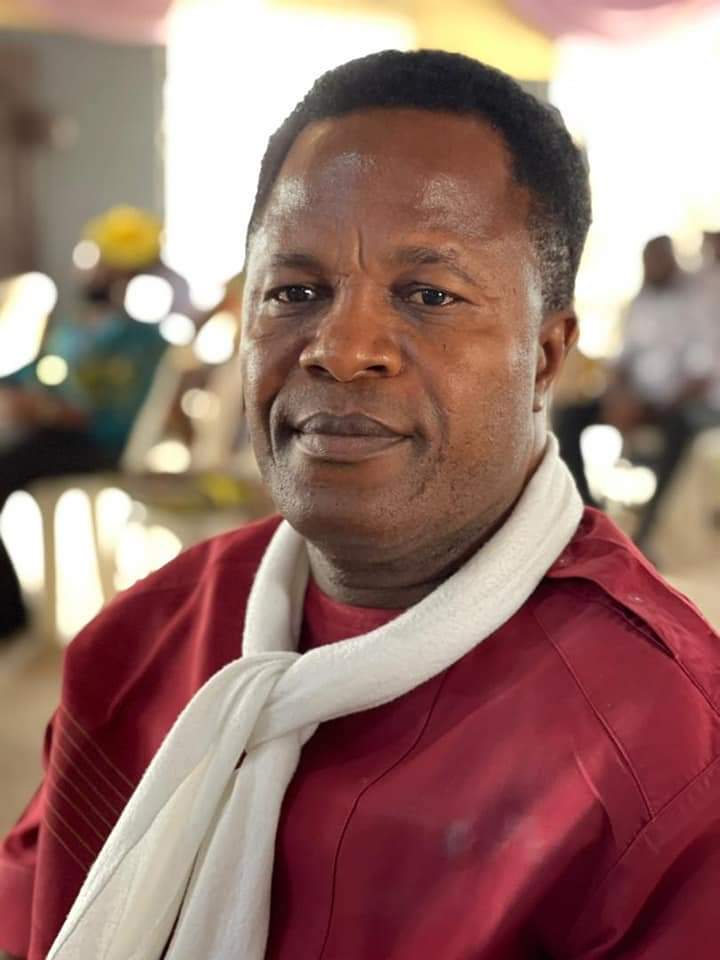

Alex Eyengho is a prominent Nigerian filmmaker, actor, and journalist, known for his extensive career in the entertainment industry. He has served as Secretary-General of the Association of Movie Producers (AMP) and the Vice President of the International Federation of Film Producers Associations (FIAPF). In this interview with TONY OKUYEME, he talks about the upcoming maiden edition of the Warri International Film Festival (WARRIFF), which he initiated, sharing his thoughts on Nollywood, and other issues
What motivated you to establish the Warri International Film Festival, and why is Warri the right location for this event?
Apart from the fact that film festivals are key enablers of the motion picture industry globally, I was motivated to establish the Warri International Film Festival (WARRIFF) as one of my own ways to give back and add value to a place that has contributed a great deal in defining me as a filmmaker, theatre and media practitioner for the past one year shy of three decades. Warri is the right place because Warri is home, the commercial nerve-center of oil and gas-rich Delta State, one of the oldest cities of Nigeria, and a leading brand in the Nigerian creative industries. This is why the slogan for WARRIFF 2025 is: “Warri no dey carry las.”
What gaps in Nigeria’s film festival landscape does this festival aim to fill?
Glocalization! The content and context of the annual WARRIFF will be local-centric. In other words, we push our local contents to the world, in all ramifications. This is why from the outset, the theme for WARRIFF 2025 is, “FILM: The More Local, The More Global.” We see things from the keyhole of local contents. This is our concept of “glocalization” in all we do at WARRIFF.
What is your vision for the festival’s impact on emerging filmmakers and the local creative economy?
The vision here is to ensure that our training and retraining programmes are transformatively value-adding. Our workshops, seminars, master classes, etc., will be indepth, focussed, engaging and interactive.
Ultimately, WARRIFF will be a platform of certification for emerging filmmakers and others in the filmmaking process. Our concept of glocalization, as explained earlier, will naturally address the aspect of the local creative economy.
How will you balance showcasing Nigerian cinema while attracting international participation?
The WARRIFF’s concept of glocalization takes care of this. This concept does not in any way seek to shut the door against international participation. This is why call for entries was not limited to Nigerian films alone. So far, we have received entries beyond Nigeria. We will no doubt strike a balance when it comes to screening and showcasing of films during WARRIF, albeit from the keyhole of Nigerian and African cinema.
What should participants expect from the festival?
Best of information, education and entertainment. The programmes will be purpose-driven. Grand opening and clossing ceremonies. Great film screenings, master classes, workshops, seminars, panels, life-changing networkîg, etc.
How has Nollywood evolved since you began your career, and where do you see the industry heading?
Since I came into the industry in 1996 after completing the mandatory NYSC, Nollywood has evolved in a most positive manner. Things have really changed in the modus operandi of both the practitioners, practice and content. I will be 30 years in Nollywood by next year, 2026.
Things have really changed with the way and manner we handle the process of filmmaking at the stages of pre-production, production and post-production.
Ditto to the practitioners as to how they organize themselves under the various guilds and associations. I see Nollywood rivaling the major filmmaking nations of the world, in a few years to come. This, however, will happen sooner than expected, if we take seriously the concept of glocalization.
From your experience, what are the biggest obstacles preventing Nollywood from reaching its full global potential?
Using the English language to make our films! We need to go back to making films in our various indigeneous languages, which are natural to us.
The universal language of a great film is great storyline/ screenplay, great picture and great sound/ audio. Once you get these right at the stages of pre-production, production, and post-production, you will have a great film, even if the language is Itsekiri, Yoruba, Hausa, Igbo, Ijaw, Egun, Urhobo, etc.
How can Nigerian producers better protect intellectual property and improve distribution models?
For the protection of Intellectual Property (IP), the Nigerian Copyright Commission (NCC) is saddled with that responsibility. However, the IP right owners, must work in collaboration with NCC, to get the job done, both locally and internationally. On the issue of distribution, things have changed significantly.
The era of VHS, VCD, DVD distributors (marketers) is long gone. We are in the era of cinema, streaming platforms (Netflix, Amazon, etc), and others like You tube, Facebook, Tiktok, etc. The key players here are the exhibitors, distribitors, “aggregators” etc. Are they treating producers well? Not to the best of my knowledge. Certainly, producers deserve better!
What are the unique challenges and rewards of directing for stage versus screen?
Each medium of creative expressions, have their peculiarities to the extent comparing them is like comparing apples and oranges. The challenges and rewards are not the same to the director and even the producer. You know these things as much as I do.
How can theatre and film communities in Nigeria collaborate more effectively?
Unlike in the past, the collaboration is more manifest these days. Theatre and film are doing the same things but using different approach and via different medium. Collaboration more in the area of capacity building, advocacy for the creative industries, etc.
What advice would you give young Nigerians hoping to break into filmmaking?
Get formal training, mentorship or both. Belong to relevant guilds/associations. There is no shortcut.
How can film festivals and productions contribute to economic development in the Niger Delta region specifically?
The same way it is contributing to other regions. Film festivals exposes to the world the tourism and hospitality potentials of the host State/area.
How has your journalism background influenced your approach to filmmaking and storytelling?
Ah… It made me hit the ground running! When I came into Nollywood in 1996, nothing was radically new to me, largely because of my solid background as a graduate of Mass Communication.
Even at that, I still submitted myself to be mentored in the practice of filmmaking by veteran writer, director and producer, Joe Dudun. However, my good friend, Madu C. Chikwendu, showed me the pathway to Nollywood politics, particular guilds and associations
