



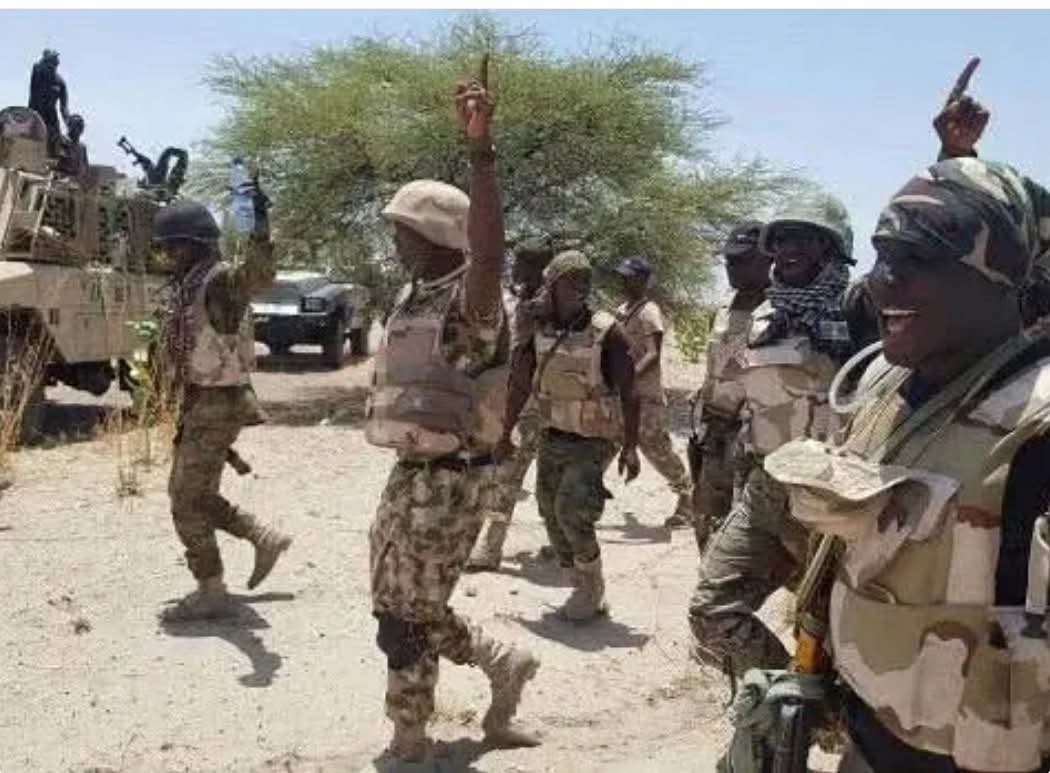

Protesters called out “Thank you!” to the soldiers, some of whom were waving Madagascar flags, the images showed.
Groups of Madagascar soldiers on Saturday joined thousands of protesters in the capital, Antananarivo, vowing to defy any orders to open fire on civilians, AFP reported.
The latest round of youth-led demonstrations drew massive crowds in what has become one of the largest protests since the movement erupted on September 25 across the Indian Ocean island nation.
As the police fired stun grenades and tear gas in a bid to scatter the protesters, a contingent of soldiers marched into the Lake Anosy area, the epicenter of the protest, where they were greeted with thunderous applause and chants of solidarity from demonstrators.
Protesters called out “Thank you!” to the soldiers, some of whom were waving Madagascar flags, the images showed.
“Close the gates and await our instructions,” they said. “Do not obey orders from your superiors. Point your weapons at those who order you to fire on your comrades-in-arms, because they will not take care of our families if we die.”
The demonstrations on Saturday were the largest in several days in the youth-led movement that was sparked by anger over power and water shortages and evolved into a broader anti-government movement.
It was unclear how many soldiers had joined the call on Saturday.
In 2009, the military base in Soanierana led a mutiny in a popular uprising that brought the current president, Andry Rajoelina, to power.
The newly appointed minister of the armed forces called on troops to “remain calm” in a press conference Saturday.
“We call on our brothers who disagree with us to prioritise dialogue,” Minister General Deramasinjaka Manantsoa Rakotoarivelo said.
“The Malagasy army remains a mediator and constitutes the nation’s last line of defence,” he said.
Several people were injured on Thursday as security forces dispersed protesters with tear gas, rubber bullets and armoured vehicles.
Videos of police violence went viral on social media, including a video of one man being left unconscious on the ground after he was chased and severely beaten by security forces, which AFP reporters also witnessed.
The United Nations on Friday reacted by calling on authorities to “desist from unnecessary force and to uphold the rights to free association and peaceful assembly”.
The UN has said that at least 22 people were killed in the first days of the protests that started on 25 September at the call of a youth-led movement called “Gen Z”.
President Andry Rajoelina has disputed the toll, saying on Wednesday that there were “12 confirmed deaths and all of these individuals were looters and vandals”.
Rajoelina initially adopted a conciliatory tone and sacked his entire government in response to the protests.
But he has since doubled down, appointing a military officer as prime minister on October 6 and picking the first members of his new cabinet from among the armed forces, public security and armed police, announcing that the country “no longer needs disturbances”.
Among the world’s poorest countries, Madagascar has undergone frequent popular uprisings since independence in 1960, including mass protests in 2009 that forced then-president Marc Ravalomanana from power as the military installed Rajoelina for his first term.
He won re-election in 2018 and again in 2023 in contested polls boycotted by the opposition.
