




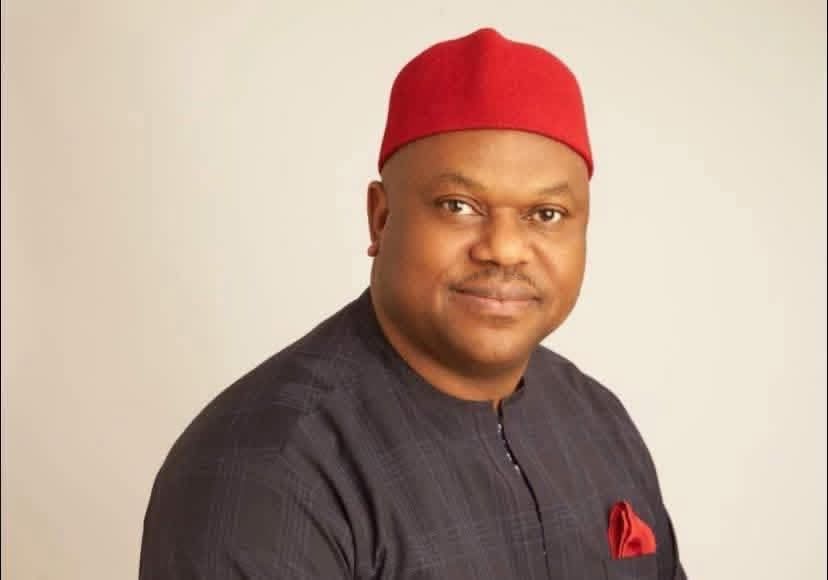

Victor Ochei, a prospective candidate for the Delta North senatorial seat in the 2027 elections, has called for a new political culture in Anioma, advocating greater inclusion, accountability and opportunities for citizens to advance through competence, enterprise and service.
Ochei’s proposed vision for Delta North centres on reducing political patronage and creating an environment in which young people, entrepreneurs, professionals and other residents can pursue their ambitions without undue dependence on political connections.
In his political agenda, he argues that leadership should be measured by its ability to expand opportunities for citizens rather than concentrate influence in the hands of a few individuals.
He maintains that the future of Anioma requires a shift towards a system that values individual initiative, fairness and public accountability. Beyond political patronage. Ochei’s proposal identifies political godfatherism and dependence on patronage as challenges that should be addressed in the pursuit of a more inclusive political environment.
He argues that young entrepreneurs should be able to establish and grow businesses without having to secure the backing of influential politicians, while professionals should have opportunities to contribute to public life on the strength of their skills and experience.
Farmers, too, should be able to pursue their livelihoods in a secure environment, while communities should be free to demand accountability from their elected representatives. The proposed approach places particular emphasis on encouraging Anioma residents to develop confidence in their abilities and participate more actively in the region’s economic and civic life.
For Ochei, political leadership should create the conditions for people to succeed independently rather than foster permanent dependence on elected officials. Linking political reform with economic development
The proposed political reset forms part of a wider development agenda that includes improved rural security, better roads, reliable electricity, agricultural processing, youth skills development and private-sector investment.
Ochei argues that political reform and economic development are closely connected, as access to infrastructure, finance, training and commercial opportunities can help residents build sustainable livelihoods. His agenda also proposes partnerships involving government institutions, businesses, researchers and young entrepreneurs to expand economic opportunities across Delta North’s nine local government areas.
Under this approach, progress would be assessed through practical outcomes, including employment opportunities, investment, support for farmers and improvements in public services.
The emphasis on measurable results reflects his stated position that political representation should extend beyond legislative activities to sustained engagement with the needs and priorities of constituents.
Accountability as a measure of representation. Ochei has also proposed a more structured system of constituency engagement through which residents could communicate their concerns and receive updates on issues being pursued on their behalf.
The proposed framework would focus on security, infrastructure, electricity, economic opportunity and human capital development.
Such an approach would require regular communication between the senator’s office and communities, as well as clear reporting on issues raised with government agencies, commitments secured and outstanding concerns.
The extent to which these proposals could be implemented would depend on the legislative, oversight and advocacy instruments available to the office, alongside cooperation from relevant government institutions and private-sector stakeholders. Looking towards 2027
Ochei’s proposed agenda presents the 2027 senatorial contest as an opportunity to discuss the future direction of political leadership and economic development in Delta North.
At its centre is the argument that Anioma’s development should not depend solely on government employment or political patronage, but should also create opportunities for enterprise, professional advancement and community participation. Whether the proposals translate into practical outcomes would depend on their implementation, the partnerships established and the mechanisms adopted to measure progress.
For now, Ochei’s stated position is that the future of Anioma should be shaped by a political culture that places greater emphasis on fairness, competence, inclusion and accountability.
His proposed vision ultimately rests on a distinction between leadership that seeks to control access to opportunity and leadership that works to broaden it.