




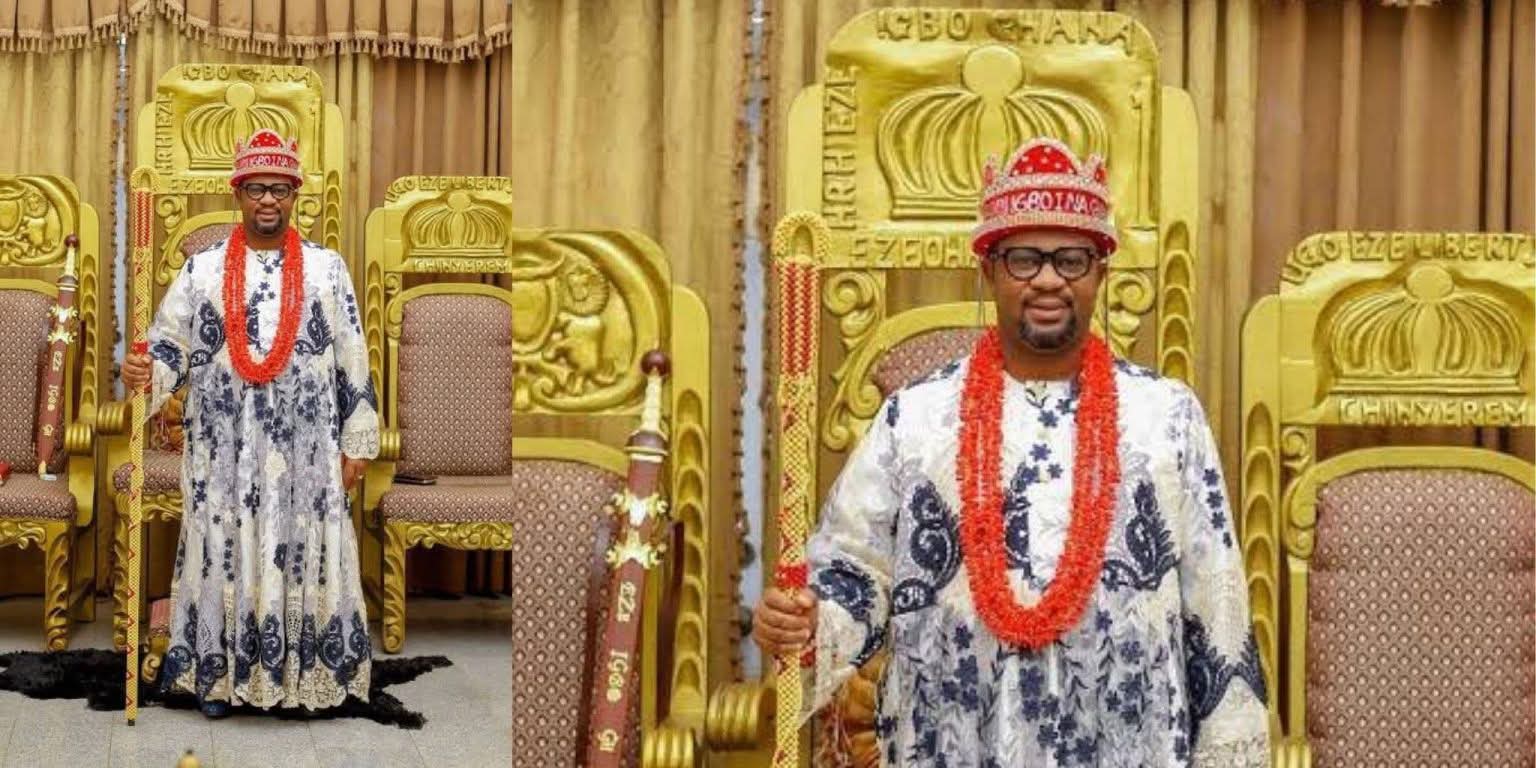

Widespread protests have swept across parts of Ghana following the controversial installation of Eze Chukwudi Ihenetu, a Nigerian traditional leader, as ‘Eze Ndi Igbo Ghana’ (King of the Igbo People in Ghana) in Accra. The move has sparked outrage among Ghanaians, who view the establishment of a foreign monarch as a threat to the nation’s sovereignty and traditional chieftaincy institutions.
Demonstrators, including youth groups and cultural advocates, took to the streets in Accra and the Eastern Region, brandishing placards with slogans like “No Foreign Thrones in Ghana” and “Honour Our Heritage.” The protests were fueled by images circulating online of Eze Ihenetu’s lavish palace in Accra, adorned with regal emblems and traditional Igbo architecture, which critics argue symbolizes an attempt to establish a parallel leadership structure.
The title ‘Eze Ndi Igbo’ is traditionally a ceremonial role within Igbo diaspora communities, intended to promote cultural unity. However, opponents in Ghana fear it could pave the way for foreign leadership structures within the country. Tensions have been further inflamed by unconfirmed reports of a planned 50-acre ‘Igbo kingdom’ in Old Ningo, alongside allegations of land acquisitions by the Igbo community, though no official evidence has been presented.
Public sentiment reached a boiling point after a viral video showed Ghanaian broadcaster Captain Smart kneeling before Eze Ihenetu during a public ceremony, prompting fierce debates on social media. Many Ghanaians are now urging the Ministry of Chieftaincy and Religious Affairs to clarify whether Ghanaian law permits foreigners to hold royal titles on its soil.
In response, Eze Ihenetu defended his role, emphasizing its ceremonial nature. “The throne of the Diasporan Igbo in Ghana is meant to protect, defend, and project the Igbo people and Nigerians as a whole. We have no political authority or territorial ambitions in Ghana. This is purely cultural,” he stated in an interview.
As protests continue, the controversy highlights growing concerns over cultural identity and national sovereignty in Ghana, with calls for government intervention to address the issue